Ever since I was young, video games were my way to connect with the world and the people around me. From helping in forums, creating my own videos and livestreams to moderating game servers, video games have been huge part in my life.
In the present day, I write my own stories for videogames and I also design them. I have also started my own business for computer hardware and videogames. To my social media!

I am working on a website where the designs of all the different cars are stored in a structured way and visible from the game GTA Online.
In Rise of Kingdoms, the community got used to creating alliances between clans. I was in charge of a clan that was part of one of the biggest alliances (AoW) on the server.
I played this game competitively in a team with four other people against other teams regularly.
The main game I made YouTube videos of. I was very active in the community, helping out in the forum, and organizing event streams on Twitch with giveaways by the developers.
While I haven’t had a Minecraft server on my own, I have helped other projects to start their own servers by administrating their servers, adding plugins and creating game modes.

PolyKing is a real time strategy game to relax, where you can build your own kingdom, city after city. The goal of the game is to make the kingdom grow continuously, by gathering resources, building new structures and develop your civilisation. You can create alliances with other kingdoms or fight them to obtain their land and resources on an endless procedural generated map.
The game experience is supposed to be relaxing and chill. The game can be modified through options like turning on and off other kingdoms, scaling the quantity of resources or how hostile other NPCs (wildlife or the north) are supposed to be. The player can progress in four different; infrastructure for gathering resources and buildings, military to protect your own cities and fight wars, politics where you can trade with other kingdoms and create alliances, and finally science to upgrade your buildings and the different jobs of the townspeople.
To avoid any stress and confusion the micromanagement of the game allows the player to control only one city at a time. If the player wants to add another city to his kingdom he will have to ascend the current city first, which is the core mechanic of PolyKing.
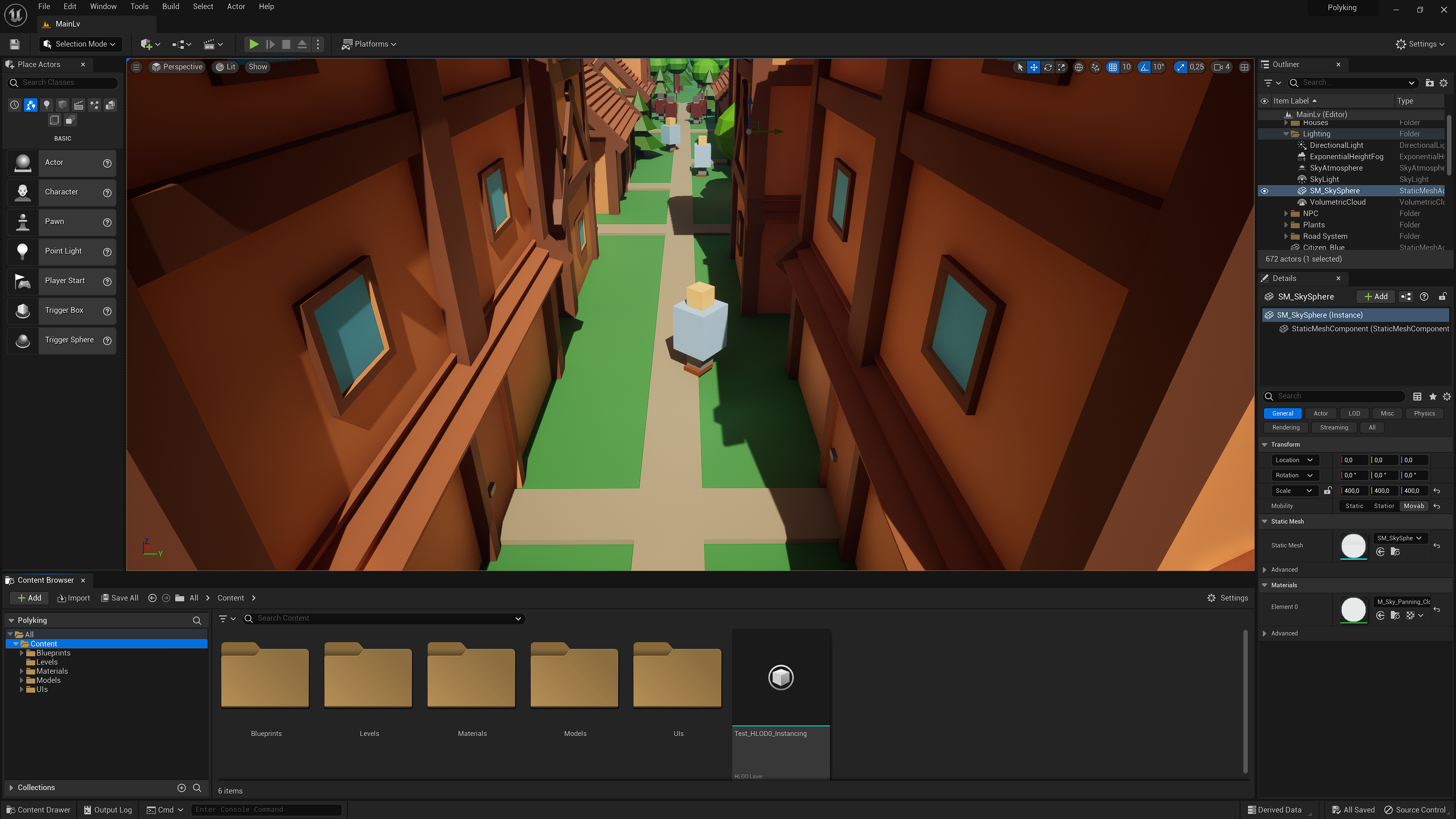
Ascending and ascended cities are the centre of the entire gameplay of PolyKing. The player can decide to ascend a city whenever he wants. However, at a certain point, the player has to ascend the current city, if he wants to keep making progress. The city will need more resources to sustain itself than it can produce, for the reason that it has a limited area around the centre, where the player can place resource buildings.
When a city ascends, it goes into an idle mode and obtains a percentage bonus on everything it produces. It will passively resupply itself replenishing any warriors lost in battle, gathering food or doing repairs, and will send all the resources it doesn’t need automatically to the new city. As a reward for ascending to the next city, the player can now build a bigger and stronger city. More so, the next bonus for ascending will be bigger.
Ascended cities will use their armies to automatically protect other close cities of the kingdom and allies, and the player can take control of the units, to attack enemies and their cities or camps.
In short, the ascending mechanic gives the game a loop. With every successful round, the reward is that his next round has more resources and a stronger army.
The game play mostly consists out of micro management, where the player has to ensure that all the needed resources are given and that the citizens are protected. To sustain a relaxing playstyle a lot of the processes are automated, with the goal that the player isn’t forced to check everything all the time. The optional gameplay consists in politics, which is based on a simple trust system. The more another king trusts the player, the easier it is to do trades or alliances with him. The player can grow trust by giving other kings good deals or help them with crisis, like protecting them against other kings or the North enemies.
At the beginning, the player chooses where the city centre should be placed, together with a small amount of resources for the start, which he needs to build. To obtain more resources like wood, stone or iron, the player will need buildings that can gather the chosen resources and bring them to the city. The resources can be refined by other buildings: for example turning stone into bricks and wood into planks.
Getting resources can be dangerous because hostile animals like wolfs and bears, can attack citizens and the North enemies can start a raid on the camps. To protect them, the player needs a military, consisting out of defensive buildings like towers, walls and gates, as well as an army. While the army will automatically defend the city, the player can choose units to patrol in other areas, to protect camps and roads leading to the city. If an army unit gets killed, the city will automatically create new warriors and assign reassign jobs, but only if the needed resources are met. Repairs of damaged buildings are also done automatically, only if a worker can reach them safely.
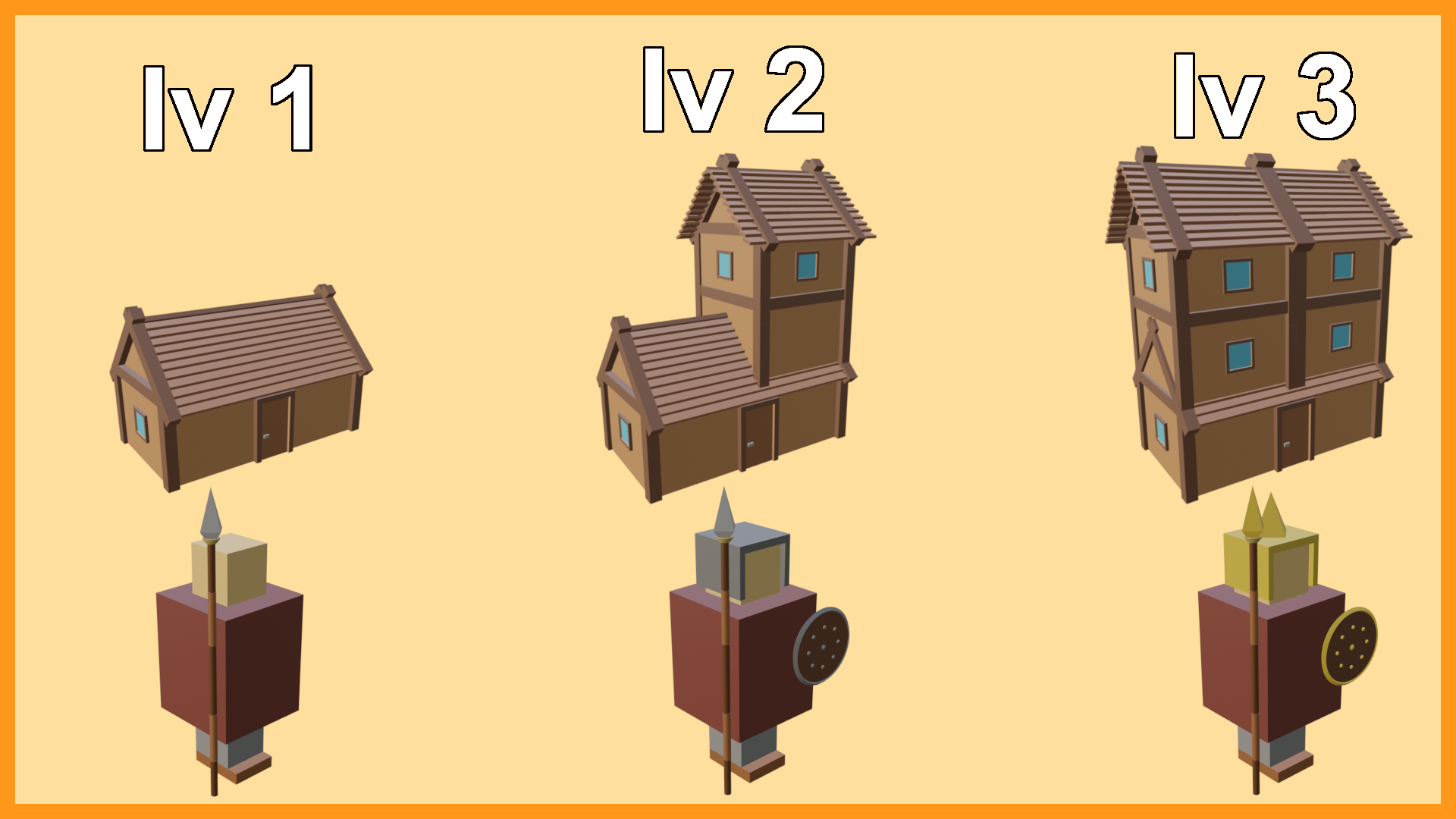
For anything to run within the city, the player needs citizens. The more houses he has, and the better these are, the more citizens he can have. Having more citizens will result in more options to expand the city. To build residential homes, the player needs refined resources, like stone bricks and wood planks. If the player wants to construct more buildings, in general of a higher level, he also needs rare resources like iron or gold.
To allow the player to progress within a city, as well as have progress that goes onto his entire kingdom, he to create science buildings to research upgrades. The upgrades can be divided into two groups: the first group are city upgrades and are for buildings and units. With these upgrades, units and buildings become more efficient and resilient to damage. The second group are for upgrades regarding the entire kingdom, and apply to every city. They consists of stat buffs for buildings and units, as well as new options for micro management, politics and military orders. While the city buffs are pretty cheap and can be achieved in a single run, the kingdom buffs are a lot more expensive, requiring the resources of multiple cities to research them.
At the beginning of the game, the player’s most challenging conquest is to overcome to local wildlife. Later in the game, he will face challenges that require him to defend himself against and his kingdom against the North people, which are an enemy faction that cannot be negotiated with. Their camps are randomly generated on the map, including fortresses, which the player has to get rid of. If the player fails to defeat these forces, he has a higher probability of being raided. The Norths will also attack other nearby kingdoms, to destroy their territory and steal their resources.
After my first board games made out of Lego bricks and figures, I wanted to give my own spin on my favourite game Yu-Gi-Oh. My goal was to change my two biggest problems with it: The fact that lp (life points) are just another resource. Where only the last life point really counts and the second problem, that a group of small creatures can’t take on one big creature.
In TDK your lp are determined by your Tor-Cards (Gate Cards), where you add up the number on the cards, to obtain your total lp. The points of the creatures you control can’t be higher in total than your lp, thus if you lose lp you can’t play that many creatures anymore. Because of this every single lp makes a different and can have an influence onto your victory. To combat my second problem, you can add creatures, which are next to each other, to a group. This group will fight like one creature, leading to multiple weak creatures being able to fight one strong one.
TDK (Engl. Gates of War) was made before I started to get my hands onto programming and doing digital games. Today it’s not a table top game anymore, because I am working on turning it into a digital game, to have more freedom in card designs, as well as game mechanics.

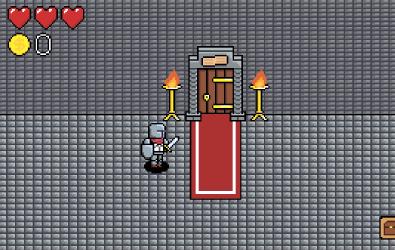
When I started programming with Java, I wanted to create my own digital game. Not even knowing what OOP was, I started to create RNG RPG, using nothing more than whiles, ifs and variables, together with the CMD terminal for input. I created a +3000 rows long single class behemoth of a game.
RNG RPG is a game, where everything is randomly generated, from the items you get, to the monsters you have to fight. You have to venture through a randomly generated dungeon, room by room. Every room can be a gift room (A random item), a shopping room, a monster room or a boss room. To give some consistency, the player can decide if he wants to buy random items from the shop or invest into his own skill points, but the items usually give better stats for the same price.
Today RNG RPG is much more advanced having a visual interface for the player and better rng, for a more funny game experience. While this game is mostly playable, I use it to apply new things I learn for the Unreal Engine 5.
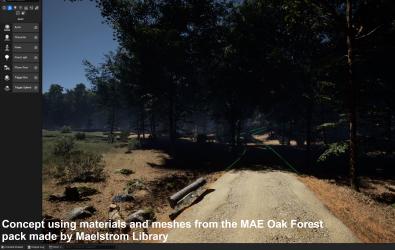
This is a concept for a horror videogame. It’s my first game with realistic graphics, and is about a church in the 1920, with the problem that every night Wiedergänger (A German type of undead) appear and terrorize the village of the church. The church requests help from the Vatican, to allow the use of old druid rituals, to combat the Wiedergänger.
The player is an investigator, send by the Vatican to figure out the cause of the problem. While at day, the player can venture into the village, talking to the people living there or getting supply to repair and enforce the defends of the church, because in the night the Wiedergänger appear, and attack the player, if he doesn’t make it back to church by nightfall. The problem for the player is, that the more he progresses in the story, the deeper he has to venture into the surrounding forest, taking him more and more time, to get back to church before he is in danger.